Pages

Tuesday, 3 May 2011

Dan Holloway interview: The Company of Fellows

The Company of Fellows by Dan Holloway
70p/99c


As well as thrillers, Dan Holloway writes and performs transgressive shorts with titles like Meat, SKIN BOOK, The Last Fluffer in La La Land, and The Things We Talked About While She Was Bleeding Out, which can all be found in his collection (life:) razorblades included. He is also the author of literary novels Songs from the Other Side of the Wall and The Man Who Painted Agnieszka’s Shoes (all royalties from which are being donated to the Red Cross Tsunami Relief Fund)

Can you sum up The Company Of Fellows in no more than 25 words?

Imagine the Hannibal Lecter novels set in Oxford University

How important is a book's central character?

Absolutely essential, especially if you’re writing a series. The problem a writer faces though is balancing their protagonist against their villain. A villain is always more fun for the writer and more alluring for the reader. If you’re writing one-offs you can give in to that to some extent. You can’t if you’re writing a series, because however great your villain readers will come back for the second book if they love the protagonist. Which is also a great exercise for the author because it makes you put the effort into the repeated characters. The other challenge I’ve found with a serial character is how to keep enough back to allow them to develop over the series, or at least to allow the reader new information.

My main character, Tommy West, has a massive great conflict at his centre which gives me all kinds of fun to play with. He was a successful academic till he had a breakdown. He reinvented himself as an interior designer, but he desperately misses the intellectual cut and thrust of the life he left behind – only going back to it brings back all the ghosts that sent him to his breakdown first time round. So I get to dangle him on this tightrope, unable to resist mysteries that draw him back into that world, but unable to cope when he gets there. It gives an extra dimension of danger to everything he does.

What aspects of marketing your book do you enjoy?

Live readings. Without a shadow of a doubt. Like I get tiresome saying to people, we don’t write books we write stories, and storytelling has a history that stretches back way way before the written word to the campfire. I just don’t get any writer who doesn’t relish standing or sitting in front of a live audience and watching the whites of their eyes as the story unfolds, listening to the laughter turn to gasps, watching faces smile and contort to horror then come back to an uneasy smile. Of course it helps if you’re a complete exhibitionist. I once crossed over a square in Athens when we were on holiday so I could happen to be passing a camera crew that was interviewing tourists about restaurant prices for local news.

If you had to re-read a crime novel right now, what would you choose?

Hannibal. It’s a book that pushes so many boundaries for a crime novel – in many ways it’s more Interview with the Vampire than Silence of the Lambs. I hated it first time I read it because I was expecting something like Red Dragon or Silence, but I went back and read it again and realised just how good it was. It’s like Edgar Alan Poe at his best. I must have read it about 20 times now. I even had the Hannibal Lecter novels as my specialist subject when I went on Mastermind in 2006.

What are the greatest opportunities facing writers these days?

It depends entirely what you want. I think if you write in commercial genres, you can sidestep some of the old barriers and prove that you *can* sell. I also think midlist writers have a great opportunity to make the kind of modest partial living they no longer can in print. But I think to some extent Kindle is the opiate of the writer. The success stories we see around us can blind us to what’s best for our books and our writing – we can spend too much time trying to do what Amanda Hocking or Saffina Desforges did and stop thinking what *we* should do. But the one real edge we have as indies is flexibility – the ability to tweak and change and do what’s right for us. If we give that up to follow “accepted wisdom” uncritically we lose the edge.

Which author should be much better known?

Cody James. She writes the most extraordinary, exhilarating prose you’ll ever read. I’ll declare a conflict of interest – her novel The Dead Beat was one of the first books I published when I set up eight cuts gallery press, but that was because it left such a blistering impression on me. It’s based on her life as a meth addict in late 90s San Francisco. I learned the most important lesson of my writing life from Cody. I want to quote a fairly long piece from an interview she gave. It’s something everyone who, like us, writes about the darker side of life, would do well to read and digest.:

“We were characters, misfits, and outcasts, and that’s why we gravitated towards each other, towards a scene where there was acceptance, loud music by bands who didn’t know how to play their instruments, S&M clubs, drugs, alcohol, motorcycles and fights. We weren’t stereotypes – that’s who we were. What upsets me more than anything in novels and movies in this genre (Selby Jr. I’m looking at you) is that they seem hell bent on portraying only the moments of shock and depravity – they rob the reader and the viewer of the full experience. Yes, we were really fucked up and yes, we did bad things, but we were still trying. I still spent some Sunday mornings eating cereal and watching cartoons with a 7ft tranny. And, even though you’re all jacked up and your apartment has no furniture, you still try. Even though the person cooking the turkey has been up for three days and can’t remember how to work a stove, and your guests keep going to the bathroom to shoot up and then keep falling asleep in the mashed potatoes, you’re still there celebrating Thanksgiving. There are still moments of utter joy and there is still so much laughter. If, as an artist, you don’t portray that, you’re nothing but a cheap hack.”

What are your views on eBook pricing?

This is such a hot topic. A couple of years ago I remember a massive debate about “free”, when Chris “Long Tail” Anderson’s book of that title came out. I wrote a lot of articles about it, got very irate when traditionally published writers waded in critically as though I’d been trying to diddle them out of a living. I think that’s what bothers me the most in the debate (which has moved on at a gazillion miles an hour since then) – defensiveness. I don’t get the idea that someone is somehow “entitled” to make a living at writing simply “because”, whether that because has to do with having a backlist or an agent or having a name on the indie scene or having put in a lot of hard work or having paid one's apprenticeship dues – whatever. The only thing we’re entitled to is what people will pay for our writing. So I really don’t buy into the whole “are books being devalued?” debate as a moral one.

The question for me is what works. I think the key here is that we’re in a shifting landscape and that makes flexibility and an open mind essential. I’d say keep your eyes open and be wary of putting too much store by established authors’ tactics. If I had to make a prediction, I’d say that the authors in the best position to benefit from e-self-publishing in the long run are those in what I call the large middle, midlist writers who build a loyal readership at a stable price from $2.99-$4.99, writers who aren’t interested in jockeying up the charts.

Do you have any other projects on the go?

I can’t remember a time when I had fewer projects on the go than I have fingers to count them on. I run a literary project for urban and underground writing, eight cuts gallery and our show The New Libertines is touring festivals and fringes this summer. I’m also performing some of my transgressive fiction at Brighton Fringe’s Grit Lit on May 12th.

In terms of my own writing I have two things on the go. There’s All the Dark Places, the next Tommy West thriller after The Company of Fellows. It’s about an elderly writer whose ramblings about a horrific murder she claims to have witnessed are dismissed as the ravings of an old woman slowly losing her mind when it becomes clear they are lifted from the plots of novels she wrote 40 years earlier. But Tommy thinks she may have written those novels to shed light on unsolved deaths that occurred during student riots in Oxford during the late 60s. And when he arrives at her house one day to find that she’s died in a fall he is even more convinced.

Publishing-wise, on June 1st I’m bringing out Penny Goring’s The Zoom Zoom, the most extraordinary debut collection of shorts and poems, and Stuart Estell’s mind-boggling novella Verruca Music, through the eight cuts gallery press imprint. I’m also polishing Black Heart High, a young adult dark urban fantasy/paranormal romance I’m publishing to Kindle on June 1st


The Company of Fellows by Dan Holloway
70p/99c

Monday, 2 May 2011

Mark Edwards interview: Killing Cupid

Killing Cupid by Mark Edwards and Louise Voss
70p/99c

Mark Edwards spent most of his twenties trying to 'make it' as a writer, armed with an agent and a pile of manuscripts but all he got were 15 minutes of fame on BBC2. After that, he got a proper job in marketing before being sucked back into the writing world when the Kindle arrived. He lives in south London with his girlfriend, their daughter and, arriving this August, a son. Mark blogs at Indie IQ.

Can you sum up your book in no more than 25 words?

Killing Cupid is a stalker thriller in which a wannabe writer becomes obsessed with his tutor. But then she turns the tables, with devastating results.

What was your motivation for writing it?

Killing Cupid was co-written by me and Louise Voss. When we started, Louise was in the middle of a four-book contract with Transworld. I had recently been dumped by my agent. We got drunk one night and came up with the idea of writing something together as an experiment - and also because we thought the idea of a stalker novel in which the stalker becomes the stalkee (I think I invented that word) was compelling.  Two months into writing it, a lucky meeting attracted the attention of a BBC producer who optioned it. It never got made in the end but it gave us the motivation to make sure we finished it.

How much difference does a good cover make?

I am sure the modest success we've had so far with Killing Cupid has partly been down to the cover. When I found the image, Louise and I debated whether or not to use it. Louise took a straw poll of her friends, 50% of whom said it was too strong. But we wanted something that would stand out on Amazon where you are competing with 399,999 other books. The reaction to the cover - in which a half-naked woman reclines with a gun; it's very arty - has been unanimously positive, especially from women.

Do you have any other projects on the go?

We are just about to publish our second co-written novel, Catch Your Death, a medical conspiracy thriller based on a fictionalised 'imagining' of what went on at the Common Cold Unit in Salisbury, where for many years volunteers would catch a cold and help scientists look for a cure. I like to think of it as Dan Brown and Michael Crichton teaming up to write a chase novel in Midsomer Murders country. It's chock-full of rogue scientists, stone-cold killers, made ex-husbands and has as its main character a brainy, beautiful but vulnerable Harvard professor called Kate.

I am also working on a solo novel called The Magpies which is about neighbours from hell. The idea behind The Magpies, which is a psychological horror/suspense novel (think Eden Lake) is that the really scary monsters are not vampires or werewolves. They live next door.

How important is a book's central character?

Vital. Killing Cupid has two central characters. I wrote Alex, who starts off as a creepy stalker but, I hope, becomes more sympathetic as the novel goes on. Louise wrote Siobhan, a lonely writer who it turns out, has a lot of issues. The central idea of the novel is that there is someone out there for everyone - no matter how bonkers you are.

What's your favourite part of the writing process?

I love the first draft because my favourite aspect of writing is plotting, although I never work out the full plot before sitting down to write. I love working it out as I go along. The characters tend to take a life of their own and tell you what they would do next. With Killing Cupid we did this is tandem. I wrote a chapter which I sent to Louise with some notes about what might happen next. She edited my chapter then did the same. We had no idea how it would all turn out.

What aspects of marketing your book do you enjoy?

I love networking with other writers, which is an important way of marketing online as we all help each other out, and I've met some really nice people through Kindleboards and Facebook since publishing on Kindle. But even more, I love hearing from readers who 'got' the book.  My weirdest experience was on HP Mallory's readers club on Facebook where I posted an innocuous thread about a book I was reading.  In my profile pic I am grasping a microphone which apparently looks like something else... within hours I had about 150 comments from women involving things they wanted to do to me with dildos, ball gags and whips, and asking me how, er, big I am. Still, at least three of them bought the book so it was all worth it. (The things I'll do for sales!)

As a reader, how would you describe your taste in crime fiction?

I like three types of crime novel: firstly, the dark satirical suspense novels of people like Jason Starr (a genius); secondly, gritty police procedurals like Michael Connelly or Val McDermid; finally, I love executive-in-peril white collar crime novels like those by Joseph Finder. I love to see a yuppie suffer.

What was the last good eBook you read?

Remix by Lexi Revellian is a very well-written mystery novel about a rocking horse restorer and a missing rock star; I really enjoyed it. Can I name another? The Shop by J Carson Black is a high-octane thriller that starts with some spooks gunning down a bunch of reality TV contestants, something a lot of people have fantasised about. It's a great read.

From an artistic rather than financial perspective, what book do you wish you had written?

The Secret History by Donna Tartt. I am slightly obsessed with this book and have read it too many times to count. It tells the story of a group of friends as an elite American college who accidentally kill someone and then try to cover it up, destroying their own lives and friendship in the process. It's the most atmospheric and absorbing book I have ever read. It is my favourite piece of art in the world and I immediately warm to anyone else who also loves it. Perhaps uncoincidentally, it's my girlfriend's favourite book too.

Killing Cupid by Mark Edwards and Louise Voss
70p/99c

Sunday, 1 May 2011

Danny Bowman interview: Pulp Press

Danny Bowman was the bassist and founding member of Oi!/street punk band Gundog, had his own stall in Camden market and ran English pubs in Paris, France for six years until he threw himself full time into writing and publishing. He founded Pulp Press in 2008 and writes pulp and post-apocalyptic stuff and publishes pulp novellas. He also is the marketing manager at Indepenpress Publishing so you could say that he lives and breathes publishing and literature.


Can you provide an overview of Pulp Press?

Pulp Press puts out entertaining adult books. The books are designed to provide a quick and easy reading experience that leaves the reader satisfied.

How did you become a publisher?

I was offered to have my book published at the London Book Fair of '08 by Indepenpress. But after looking at how other publishing companies operate, particularly in the mainstream, I thought I could do better. So I proposed to run an imprint for Indepenpress based along the lines of pulp fiction of the '50s and '60s. The name and concept came to me almost spontaneously.

What was your launch title?

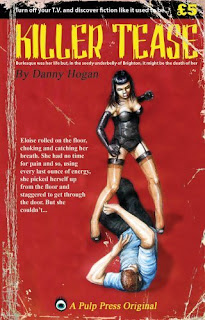
Killer Tease. Wrote it in two weeks, published it within three because I was worried that Indepenpress would change their minds.

What's your bestselling title and why do you think that is?

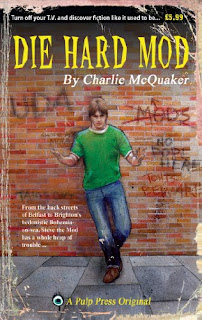
Die Hard Mod by Charlie McQuaker. Hands down our biggest selling and was the tenth biggest seller on Indpenpress’s list for 2010. I know Charlie from around here and hand picked him from watching him do a lot of readings at short story events here in Brighton. He is also a press officer by trade so I think that helped. I think he caught a real zeitgeist with the whole mod thing, too.

What are your thoughts on eBook pricing?

It makes so much sense to sell them much cheaper than print editions most especially for us as a publisher. Kindle versions are extremely easy to produce and because I have an in-house typesetter and an art department at my disposal, all the files are there ready for me. I can do five an hour, be damned. As a publisher it would be criminal for me to even consider factoring my time into a Kindle production hence I sell ours at around ten times cheaper than their print counterparts. How the hell do mainstream publishers reckon it is ok to sell their Kindle editions at over and above the hardback cover prices of some titles, can you answer me that?

What are your marketing strengths?

Good logo, name and artwork as well as four years experience as a marketing manager for a publishing house. 

What makes you angry about the current publishing industry?

Conservatism and greed. I can’t stand the fact that there’s all these middleclass bastards acting as a gatekeepers to what I read. It amazes me how a lot of people in the publishing industry don’t realise that literature is probably the most subjective of the arts for those that enjoy it. But due to the lack of foresight and haughty attitudes from many publishers, agents, book reviewers and even authors, the bookshelves are crammed with the same old same old. There needs to be alternative choice in fiction like there is in music. Open up the market with more choice and more authors will, I reckon, provoke more reading.

How much difference does a good cover make?

That old chestnut about never judge a book… is a load of bollocks. A good cover makes all the difference. Visual stimulation is incredibly important and must be taken into account when doing your cover. Always seek the advice of a professional designer if you are setting out to do your own ones. It’s amazing what they know about lettering, images, structure and all that.

How important is a good title?

Very important, I have to admit that my wife has a lot of involvement in that aspect of Pulp Press. It must stand out and not be one of a hundred similarly titled books. What I suggest is go around asking people about your title ideas, study their reactions, and listen to their feedback.

How important is a book's central character?

Absolutely essential. How many truly original stories are there? It is a good strong character that governs the pace and course a situation(s) takes that creates a great story.

What's your favourite aspect of being a publisher?

Giving the talented a chance.

What are your strengths and weaknesses as a publisher?

Weaknesses:

As I am doing this pretty much by myself I don’t have the amount of time I would like, particularly with new submissions.

Not making enough money to invest, and having to do everything on the cheap.

Could do with a higher level of copyediting, something I am working to rectify.

Strengths:

Not afraid to work with new stuff from a variety of genres.

Have a clear idea of what I’m doing and what I want to achieve.

I will not be fucked with.

What aspects of marketing do you enjoy?

Researching the best places to send review copies out to for a title, and then sending out and seeing what the response is.

As a publisher, how would you describe your ideal reader's taste in crime fiction?

That they prefer a vigilante to a copper.

What was your favourite book as a child?

The Rats by James Herbert. I know it ain’t a kid's book but then again A Clockwork Orange ain’t traditionally a kid's film either but that’s what I liked to watch as a young’un… with some Ghostbusters on the side of course.

What was the last good eBook you read?

Bye Bye Baby by this Scottish geezer… I can’t remember his name.

What crime book are you most looking forward to reading?

Truth Lies Bleeding by Tony Black. Yeah mate, it’s next on my pile. After that it will be The Bastard Hand by Heath Lowrance. Can’t wait, it looks amazing.

What are you reading now?

The Crossing by Cormac McCarthy as well as re-reading the Punisher Max series by Garth Ennis. Garth is the don and a huge influence for me.

If you had to re-read a crime novel right now, what would you choose?

Pop. 1280 by Jim Thompson. A-bloody-mazing.

Who's your favourite living writer?

Cormac McCarthy

How do you create 'word of mouth'?

It’s about getting column inches and getting mentioned as much as possible. Social networks such as Twitter are good for this, but Facebook can be a case of preaching to the converted, as Jay Stringer would say. You have to be careful about not overdoing it though. You’ll run the risk of turning people right off if you do.

How effective is advertising?

Just recently I spent a load of money I didn’t have on advertising and it doesn’t seem to have done that much if you take into account the cost. If you’re short of cash I recommend putting your efforts into getting reviews.

What are the biggest problems facing publishers these days?

Keeping print books viable and in the game.

What are the greatest opportunities facing publishers these days?

Mainstream booksellers tend to have a haughty attitude to who they deal with and are prone to committing to exclusivity deals, not to mention their hooky bestseller charts. Amazon on the other hand, who look like they’re taking the lead with bookselling,  don’t give a damn who you are or who published you just as long as they can sell it. So it looks as if the playing field is evening out a tad.

How do you feel about writers self-publishing?

What, like Edgar Allan Poe? Love him. If you have a story that you believe some people want to read, put it out there. Fuck what some tart with their poncey offices, associations and mates in the broadsheets thinks.

Which author should be much better known?

Cathi Unsworth, without a doubt.