Pages

Showing posts with label Nick Quantrill. Show all posts

Thursday, 16 June 2011

Nick Quantrill interview: Broken Dreams

Broken Dreams by Nick Quantrill
£2.08/$2.99
Amazon UK, Amazon US


Nick Quantrill is a crime writer from Hull. His debut novel, “Broken Dreams”, was published in 2010 by Caffeine Nights.

Can you sum up your book in no more than 25 words?

“Broken Dreams” is a fast-paced crime story which examines the decline and regeneration of a neglected northern city through the eyes of PI Joe Geraghty.

What was your motivation for writing it?

I’ve always been fascinated with my home city of Hull’s reputation in the wider world. If you take notice of the media and accept the various educational and social league tables at face value, you’d be forgiven for thinking it’s a place full of savages. The reality is that it’s a warm city which looks after its own. Of course, it’s not perfect and our relative isolation does breed a strange sense of distrust and unwillingness to change. I wanted to capture that in a novel and the way I made sense of it was to link it into one of the city’s major identifiers, the decline of the fishing industry.

How much difference does a good cover make?

They can be crucial. We can deny it as much as we like, but we’re all drawn to covers that speak to us. All publishers want people to pick their books up, hence the barrage of covers you see in every bookshop that look like whatever is selling well at the moment. Once a potential customer has your book in their hands, you’d hope they read the blurb. If you’re lucky they might then look at the first paragraph. If you’re really lucky, they might even buy it.

What's the best piece of craft advice you've been given?

I’ve deliberately tried to stay clear of soaking up too many craft tips. Once the idea I wanted to write took hold, it changed my reading habits. My method is to always partially read with a writer’s hat on. I’m always trying to work out why I like or don’t like a particular piece of writing. The more I read, and I’ve always been a big reader, the more certainty this gives me in my own mind. If pushed, Elmore Leonard’s tongue in cheek rules certainly contain insightful advice and the idea of getting into a scene late and leaving it early is sound.  

What's your favourite part of the writing process?

I think it’s the moments when the story surprises you a little. I’m from the plotting school of thought, so I usually have a loose synopsis and then a more detailed three chapter plan in front of me when I’m writing. I tend to sketch each scene out, just so I’m clear on the point of it, but sometimes a minor character suddenly becomes much more interesting as I type. That’s brilliant when it happens.

As a reader, how would you describe your taste in crime fiction?

Varied. I read a lot of crime, but I wouldn’t say I’m into a particular sub-genre. I like different authors for different things – George Pelecanos writes incredibly moving stories with a lot of heart. Lee Child ‘Reacher’ series might be ludicrous, but he knows how to make you turn a page. Graham Hurley’s DI Faraday series in Portsmouth is a fantastically realistic look at contemporary life in the UK. Ray Banks has forged ahead when it comes to ‘Brit Grit’. Michael Connelly has fused the ability to sell books by the shed load with artistic integrity. I could go on all day!

Which do you prefer – a standalone or a series?

As a reader, there’s something comforting about a reliable series. It’s like meeting up with an old friend again. I love the way Ian Rankin has put together a cohesive body of work. As a writer, I can see that it’s really hard work. There are certainly benefits as a writer – you can go that bit deeper as you learn more about your character, but it equally carries the danger of letting things go a little stale. The middle-ground might lie in Pelecanos’s trilogies and quartets, or Michael Connelly’s method of relegating his protagonist to the background in certain novels.

From an artistic rather than financial perspective, what book do you wish you had written?

It’s not specifically a crime book, but I would have loved to have written “The Grapes of Wrath”. I love John Steinbeck’s work, but this is my favourite. It has heart in spade loads, it’s pertinent (sadly, even today), it has memorable characters and it’s plain and direct. There’s no pretension to his words. Failing that, I’d take “Cannery Row”, “Of Mice and Men”, “The Winter of our Discontent”...

What do you look for in a good book?

First and foremost, I want to be entertained. To do that, I’m looking for strong characters, exciting plots and the ability of the writer to challenge my thinking about something. And it really can be anything. The great thing about books is that they can take you absolutely anywhere in the world and there’s no reason why a neglected northern town can’t be as exciting as New York. The one thing I don’t want in a book is the feeling that I’m being preached to by the author. I want to make my own judgment about a character’s or story’s morality.

Where do you find out about new books?

My day job is in Hull city centre, so I’m only a five minute walk from Waterstone’s. I tend to be in there weekly looking at what’s out in the new releases section. The Internet has been a great boost for finding out about new writing. It’s great to be able to connect with other writers on Facebook, though of course it’s a fine line between being informative and relentless self-promoting.

Do you enjoy writing?

It’s a love-hate thing. When you have the kind of day which sees everything go right, it’s the best thing in the world. The word count increases and it all seems to make perfect sense. On the days it goes wrong, it’s just horrible. The only way to keep going is to cling to the knowledge that you can always go back and re-draft another day. It’s not the end of the world. What I have found is that I love the act of writing a story, be it a short or a novel, but once it’s done, it’s done. I just want to be on with the next thing. In my mind, the next story is always ‘the one’.

Do you have any other projects on the go?

My main focus at the moment is putting the finishing touches to the next Joe Geraghty novel, “The Late Greats”, which will appear this autumn through Caffeine Nights publishing. The next book, which is also a Geraghty-led story, is well under way. After that, we’ll see what takes my fancy. I’m gathering ideas and cuttings which are slowly coming together into some semi-coherent ideas. I’ve also got a handful of short story ideas which need some thought, so always writing!


Broken Dreams by Nick Quantrill
£2.08/$2.99
Amazon UK, Amazon US

Wednesday, 13 April 2011

Darren Laws interview: Caffeine Nights Publishing

Darren E Laws is the author of Turtle Island, a crime thriller, and Tripping, a surreal black comedy. He is also the head honcho at Caffeine Nights Publishing.

Can you provide an overview of your publishing company?

Caffeine Nights Publishing is a crime and contemporary fiction publisher based in the UK. We are determined to change the class-driven, environmentally unsound, complacent world of publishing. We use public relations activities to raise awareness of our authors and titles concentrating on gaining good editorial coverage to create a demand for the titles. We specialise in crime and contemporary fiction titles and now solely publish UK based authors. One of my authors recently said we were ‘punk publishers’ and I like that.

How did you become a publisher?

The internet has opened up the door and to a degree made it possible for small companies such as Caffeine Nights to exist. I spent two years researching the industry and putting together the strategic elements to ensure our titles are available across the boards, both as eBooks and paperback titles. I have combined this with a love of reading and writing, film-making, public relations, and generally being a pain in the ass.

How do you decide which titles to publish?

There is no science here. A book has one small test and that is whether I like it and can see if it has a market. I have to be persuaded that an author is serious and is determined to support their book. Being an author is no place for the shy or those who feel uncomfortable doing book signings or talking to the media. I won’t lie. It can be very tough and a very quick learning curve is required.

How much editorial input do you have in your titles?

The whole process is collaborative but I make suggestions to authors and we discuss elements which I think needs work. We now have a small team of editors and proof readers who I direct and this element is also very collaborative with feedback coming from them as well.  Once we receive a manuscript back I add further comments from the editors/proofers as well as my own for the authors to think about.

What are your marketing strengths?

Public relations. I am a public relations professional and know the power of well placed editorial. We are also fortunate enough to have an extremely talented graphic designer whom I trust implicitly, so we can respond to opportunities quickly.

What makes you angry about the current publishing industry?

Too much, sadly. The industry is set in its ways, complacent, class driven, has little or no regard for the environment, has bloated supply chains, is slow to react to change, and ignores the working classes as having true artistic integrity and something to contribute. I could write a book...honestly I really could.

What was your launch title?

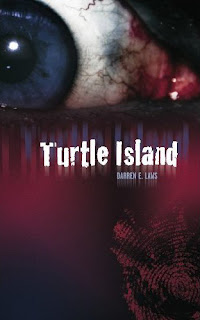
Turtle Island. I used one of my own novels to test the water and see what worked and what didn’t before submitting any of our signed authors work to the market. We now have over a dozen authors with 8 titles published and a further 8 planned for this year.

What's your bestselling crime title and why do you think that is?

These are still early days for Caffeine Nights, but at present Broken Dreams by Nick Quantrill. Nick is a dedicated author and prepared to go the extra mile.  Broken Dreams is a cracking crime noir which has real heart and I think this has resonated with readers. We have had a great media response for Nick and his book and are fortunate that Nick has applied himself in all aspects of book promotion.

How important is digital in relation to paper?

Any publisher who still thinks it isn’t is a fool.  I have been waiting for over a decade for eBooks to finally find a market.  I remember downloading eBook software in 1998 thinking back then that the potential was enormous; my views haven’t and won’t change.

What are your thoughts on eBook pricing?

For much of the industry it is new and they are trying to come to terms with it. Some have it right, some have it wrong. There are other issues such as author royalties which also make me angry.  Some publishers are simply exploiting authors, sometimes purposely and sometimes through shocking ignorance.

How much difference does a good cover make?

The old adage never judge a book by its cover may be laudable but frankly the vast majority of sighted people are attracted by visual stimulation in the first instance. A book is a product and a cover has to represent the quality of the writing. It has to support the author and his work. A great book can be let down by a bad cover.

How important is a good title?

Very important. It is the first thing a reader acknowledges after the striking artwork.

How important is a publicity hook?

Gaining the attention of the media is vital. We always need a strong story to go to the media with a title. Being a small publisher we are savvy enough to know we can’t compete with the well entrenched positions of the big five publishers. Those books attract publicity like a fly to a freshly laid turd. The big publishers have a marketing budget, can advertise and gain recognition far easier. We have to fight for every column inch we gain. I recently spoke with a marketing department from a large publisher the other day and was gobsmacked when I was told that they did not need to do anything to promote a certain title as “those books sell themselves”.  It must be nice to be in that position but it typifies the complacency which exists in publishing today.

How important is a book's central character?

This is the equivalent of the media hook for the reader. A strong central character is something a reader will associate with and hang his or her hat on, or in other words invest their time and emotions in. If I don’t feel as though I know a character by page 50 or care about him or her I am not going to invest my time beyond that. I am that shallow.

What's the best piece of business advice you've been given?

I wish I could answer that, but frankly good business advice has been rare. I wish I could be more positive on this one but running a business is lonely.  Possibly that’s why it may be ideal for authors.

What's your favourite aspect of being a publisher?

There are loads. Telling authors that we are going to publish them is always good. Gaining good coverage or interviews for our authors is another. Seeing the books for the first time is always a buzz and working with authors throughout the process.

What are your strengths and weaknesses as a publisher?

I have a form of ‘business autism’ which basically means that I have no sense of belonging or not belonging, or not even caring, whether people think I should belong.  One of my strengths is that we have assembled a fantastic team which produce fantastic books that hit above our financial weight. Biggest weakness is being self-funded. We have not received a penny bean from anyone, so we are hand-tied for advertising and marketing, two components I have faith in which can elevate our books into the major league.

What aspects of marketing do you enjoy?

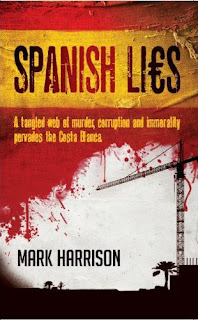
The biggest thrill for me is when I obtain a great piece of editorial coverage for one of our authors/books. In the past 12 months we have secured editorial in National newspapers and magazines, TV, Radio, local and regional newspapers. Feature articles, interviews and even a rather decent book trailer shot by ITV for Nick’s book, plus a forthcoming show on ITV featuring an interview with Mark Harrison talking about what inspired his novel Spanish Lies.

As a reader, how would you describe your taste in crime fiction?

I love atmosphere, bleak humour and a sense of justice even if it is somewhat skewed sometimes. Life is unfair and I can live with it if a book has an outcome which may be unfair but makes you think.

As a publisher, how would you describe your ideal reader's taste in crime fiction?

Sublime, ha ha.

Which author should be much better known? 

I’ll take the 5th amendment on this one

What was your favourite book as a child?

The Rats by James Herbert.

What was the last good eBook you read?

I actually edit submissions on a Kindle so in truth you will see what those books are over the next 12 months.  

What crime book are you most looking forward to reading?

From a purely selfish point of view it would be ‘Dark Country’ the second novel in a trilogy I began nearly a decade ago. So if I am holding that book it will mean I have finally completed the edit. At this rate the final book will be ready as I move into my sixth decade.

What are you reading now?

A number of novels that are in the final stages before publication; so it’s a case of reading and re-reading them. I also receive submissions which is sometimes a joyous experience and sometimes not.

If you had to re-read a crime novel right now, what would you choose?  

Probably American Psycho. It’s not a conventional crime novel but Bret Easton Ellis showed that crime novels can explore the dark side from the perspective of the lead protagonist while making the reader ask questions about their own sense of morality. I think many of our novels explore the battle of good Vs evil, but this was a brave bit of writing.

Who's your favourite living writer?

I enjoy many of the novels of Chuck Palahniuk. You get the sense of joy and fun he has with his books, many of which are purely experimental in form and often self-indulgent. It’s a bit like listening to a new Radiohead album — challenging, and you may not always enjoy everything, but the boundaries get pushed and open a path for others, which in itself is very healthy.

What makes you keep reading a book?

Good characters and a story which makes you care for those characters.

What makes a book sell?

Money; sad but true. The good news is that the Internet is changing that and democratising publishing to the point where word of mouth can mean more than marketing budget.

How do you create 'word of mouth'?

We create a buzz by pushing information through all media channels, traditional, social and new. Creating a buzz is the ultimate goal and something we always aspire to achieve on a number of levels across many different platforms. The world of publishing is different from the world of music where a new pretty face can help shift millions of units. Fortunately for many authors it is often the product which is regarded as cool rather than the author.

How effective is advertising?

Give me a budget and I will prove in a heartbeat how effective it can be. I think coming from a background of working in one of the most successful integrated marcoms agencies in Kent, I have realised how complacent most of the publishing industry is when it comes to advertising.

What are the biggest problems facing publishers these days?

The biggest problem is ‘publishers’. By which I mean a lack of acknowledgement of the importance of digital within the industry. The supply chain is unnecessarily burdensome on book stores and cuts into the bottom line. Publishers printing unnecessarily large book runs and flooding what few stores we have left with stock which they know won’t shift. It does help massage their turnover though until the books are sent back unsold. These books then are sold off to supermarkets at rock bottom prices devaluing product even further and adding to the environmental impact or worse, pulped and sent to landfill. What publishers fail to see is that ‘giving’ away paper product to make up for printing too large a print run is killing the industry and our remaining book chainstores and independents cannot compete if consumers think all books should cost £1. This will lead to a future where the only choice we have for titles will be on the internet as brick and mortar stores invariably disappear. Publishers are creating a vortex of greed which in turn will create a void left by the disappearance of the very stores which sell their product. This doesn’t even skim the surface of what I believe is wrong with publishing today.

What are the greatest opportunities facing publishers these days?

New media, social media, digital media.

How do you feel about writers self-publishing?

Good for them. I applaud it whole heartedly. It is extremely tough and I do think some authors have a naive view of publishing and what actually has to happen to generate sales. They will learn or fall by the wayside exactly like many publishers. It’s tough. If all there was to it was having a finished product, it would be nice. Sadly it really is not that simple, and that is the difference that working with a good publisher can make.